

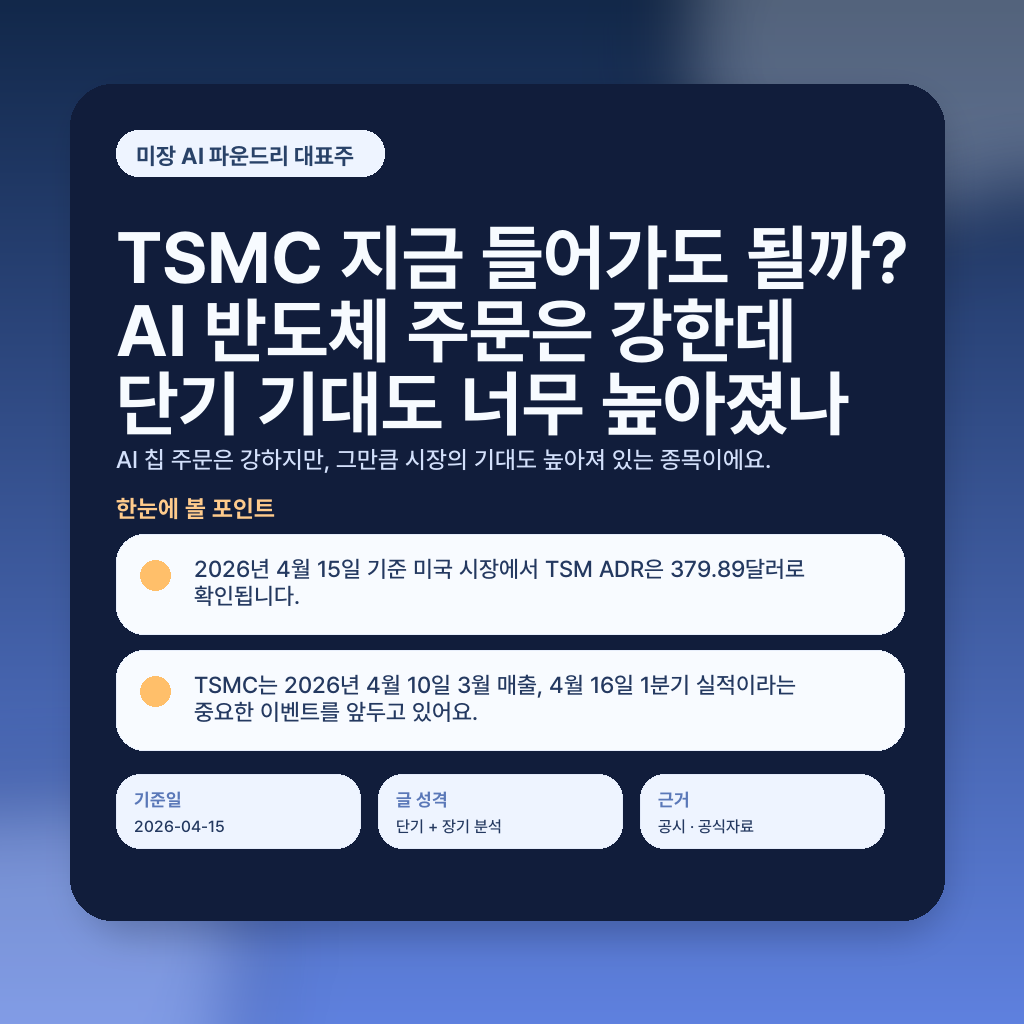
TSMC reads less like a semiconductor company these days and more like the live gauge of how real global AI investment actually is. 🙂
Even when you are watching AI winners like Nvidia or AMD, the trail eventually leads to one question — who is actually manufacturing these chips? That answer is TSMC.
As of April 15, 2026, this piece lays out where TSMC stands, why near-term pressure can build, and why so many investors still rate it highly over the long run.

Pairs well with this article
Monitor Light Bar That Cuts Eye Strain
💬 One-line tip: late-night chart and filing sessions get noticeably kinder once you fix the ambient lighting alone.
✨ Key takeaways
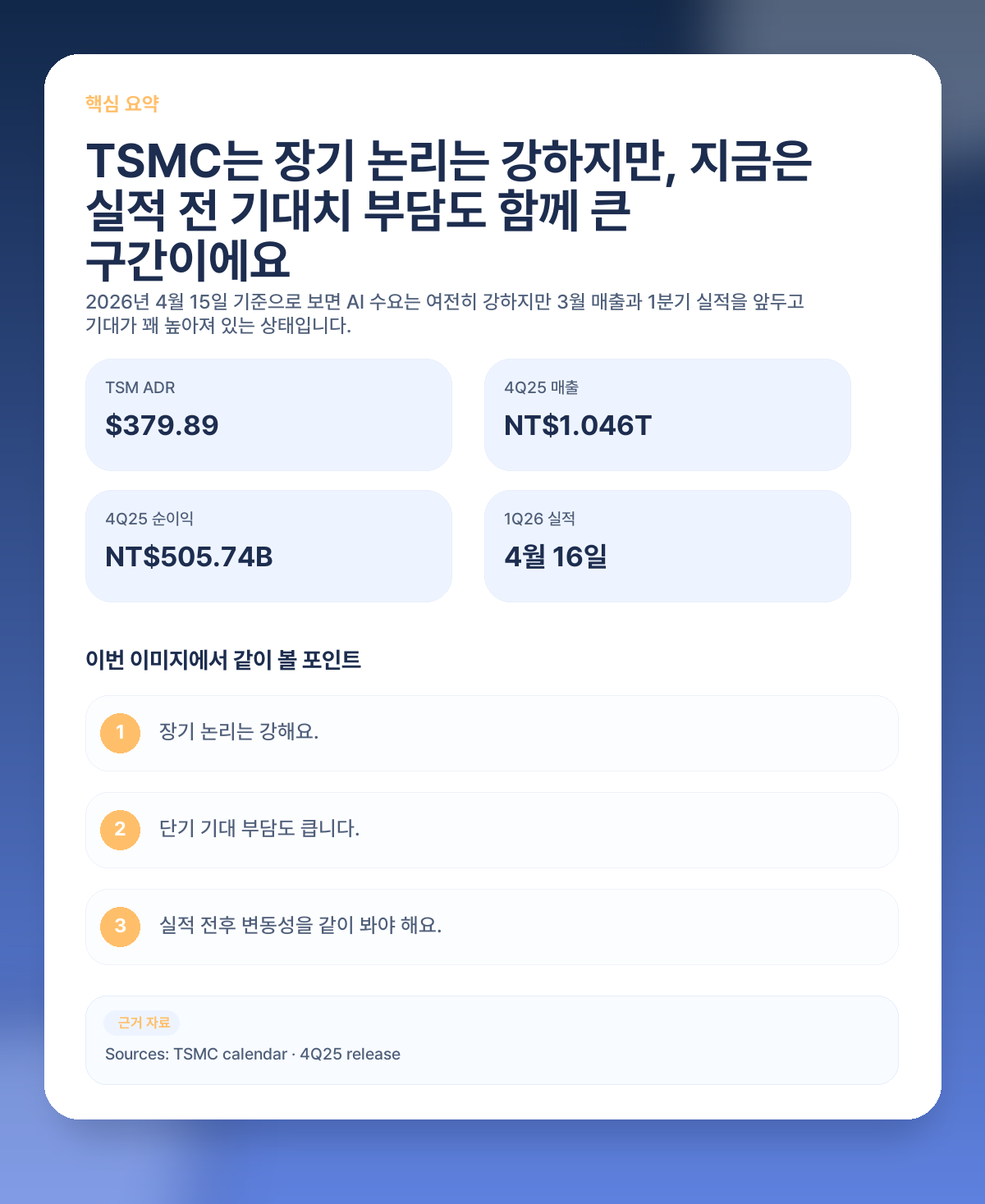
Up front: TSMC’s long-term picture remains strong. The April 2026 calendar alone — March revenue release and Q1 results back to back — tells you the market is using these two events to verify that AI order strength is holding.
The relevant question now is not “is it a great company” but “how much of that greatness is already in the price.” Given its grip on AI foundry work the long-term appeal is real; just remember the stock can be knocked around by pre-earnings expectation.
- Long-term strength: it sits at the chokepoint of AI chip production.
- Short-term strain: expectations balloon right before monthly revenue and earnings.
- Practical point: managing entry pace matters more than calling direction.
📊 Where TSMC stands right now
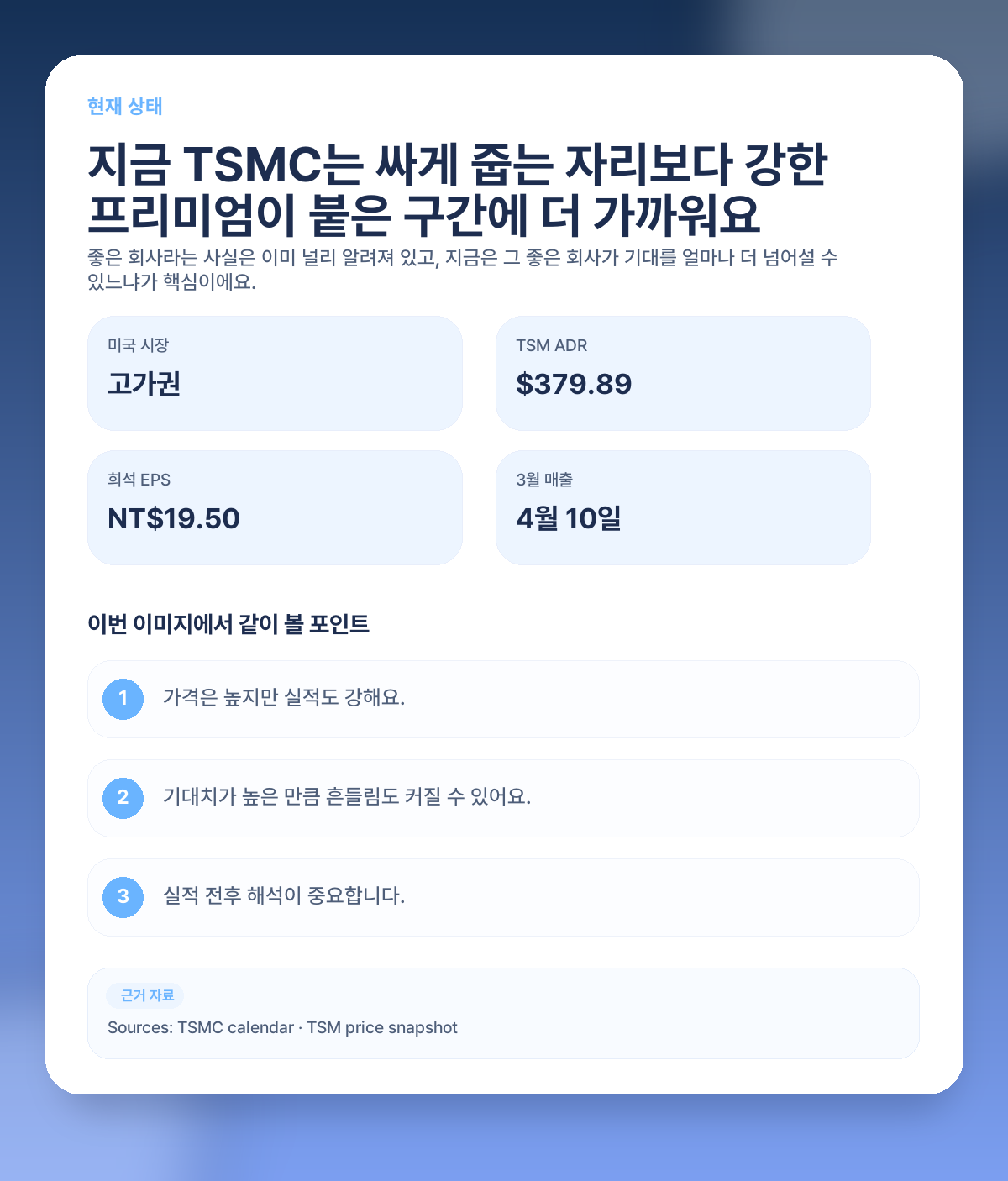
On the U.S. market, the TSM ADR traded around $379.89 on April 15, 2026. Judged on price alone, this is no longer a bargain zone — it is a name already carrying a hefty growth premium.
The market is not willing to give that premium up, and the reason is concrete. In its official 4Q25 results, TSMC posted revenue of NT$1.046 trillion, net profit of NT$505.7 billion and diluted EPS of NT$19.50, and said strong AI-related demand would keep underpinning the business into 1Q26 as well.
So TSMC today is a stock that looks expensive while also being a company that explains a good chunk of that price with numbers. That combination is what makes it both harder and more important to own correctly.
- Results and order strength have not cracked.
- But a small miss on monthly revenue or quarterly print can set off big swings.
- This is a verification zone, not a buy-the-bottom zone.
🧠 Why the long-term camp stays loyal
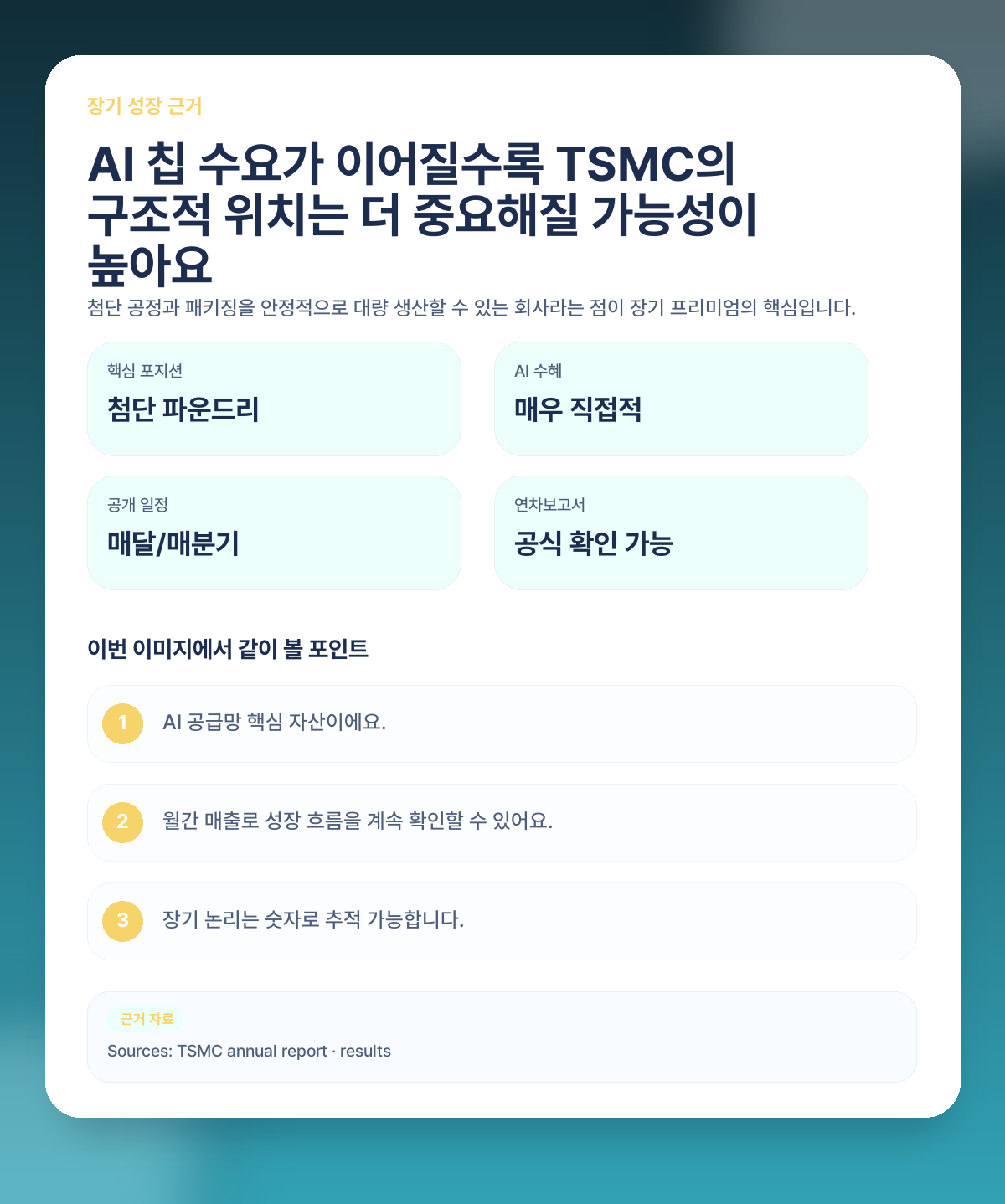
The long-term logic is almost embarrassingly simple: when AI chip demand grows, the company that can mass-produce the most advanced nodes most reliably captures the profit. TSMC sits at the very top of that structure — that is its core advantage.
Its official 2024 annual report and 4Q25 results show strength in advanced nodes and advanced packaging simultaneously. That is not just manufacturing muscle; it is the yield and supply stability the AI-server era demands.
And with monthly revenue releases and quarterly results stacked densely through 2026, the market can read the temperature of AI demand in near real time. Over the long run, that “verifiable growth” is the biggest weapon of all.
- Its position in the AI chip supply chain is hard to substitute.
- The era demands advanced nodes and packaging at once — a structural tailwind.
- The dense release calendar keeps growth continuously checkable.

Pairs well with this article
Laptop Stand That Makes Long Sessions Easier
💬 One-line tip: raising your eye line just a little cuts intraday fatigue more than you would expect.
⚠️ What weighs most in the short term

First, the expectations burden. TSMC sits at the very top of AI demand, so the market never grades it on “good” — only on “better than expected.” Miss that by a little and the drawdown can be outsized.
Second, geopolitics and supply-chain variables. TSMC is a fine company that also happens to sit in the middle of the world’s geopolitical fault line. For such names, the risk premium can spike on sentiment alone, independent of fundamentals.
Third, the capex-and-demand cycle. Even with AI demand strong for years, customer inventories and investment pacing can wobble quarter to quarter. A great company is not automatically an easy stock to buy at any moment.
- Great company, not necessarily easy stock.
- Expectations move the price harder into earnings.
- Geopolitics and margin interpretation both matter.
✅ The realistic way to enter from here

For a stock like TSMC, controlling your entry pace is more realistic than calling the direction — especially with big dates like March revenue and Q1 results close by.
A single lump sum puts you directly in the line of fire of post-earnings volatility. A staged approach leaves room to add if results impress, and keeps you psychologically intact if a pullback follows a letdown.
If your horizon is long, build the position gradually while checking two things: is AI demand still alive, and is TSMC holding its yield/market-share position?
- Slow down right before earnings.
- Tranches are far easier on the nerves.
- The long logic is great; the timing difficulty is not small.
📌 Numbers and dates to keep checking
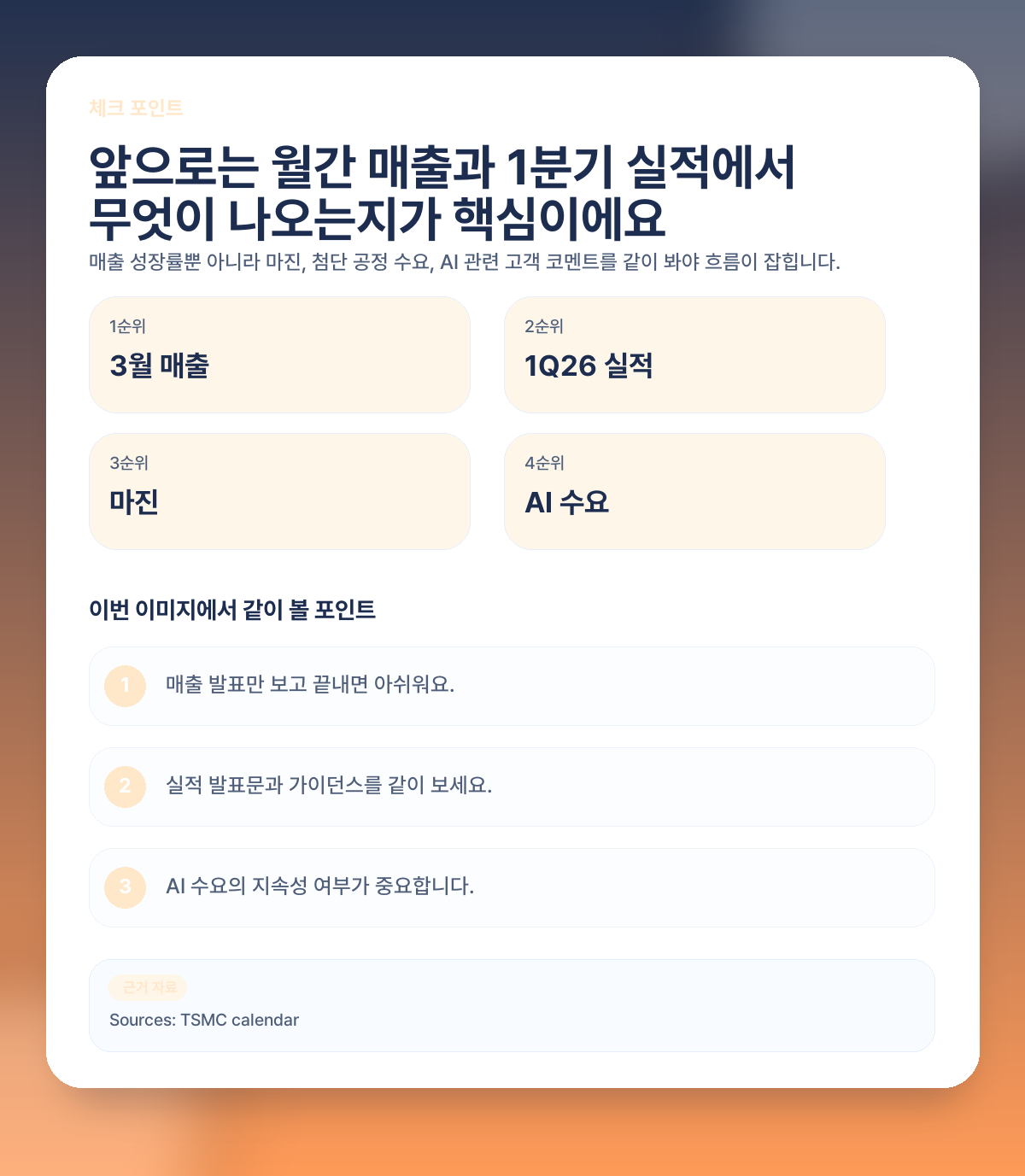
With TSMC, do not watch the price alone — watch the calendar. April 10, 2026 (March revenue) and April 16, 2026 (Q1 results) are the checkpoints of this stretch.
Beyond the growth rate, read margin guidance, advanced-node utilization and the AI order commentary together — that is how you understand why the stock moved the way it did.
- Whether the March revenue print pushes expectations even higher
- Whether margins and guidance hold in the 1Q26 report
- Whether management frames AI orders as durable, not a one-off blip
Pairs well with this article
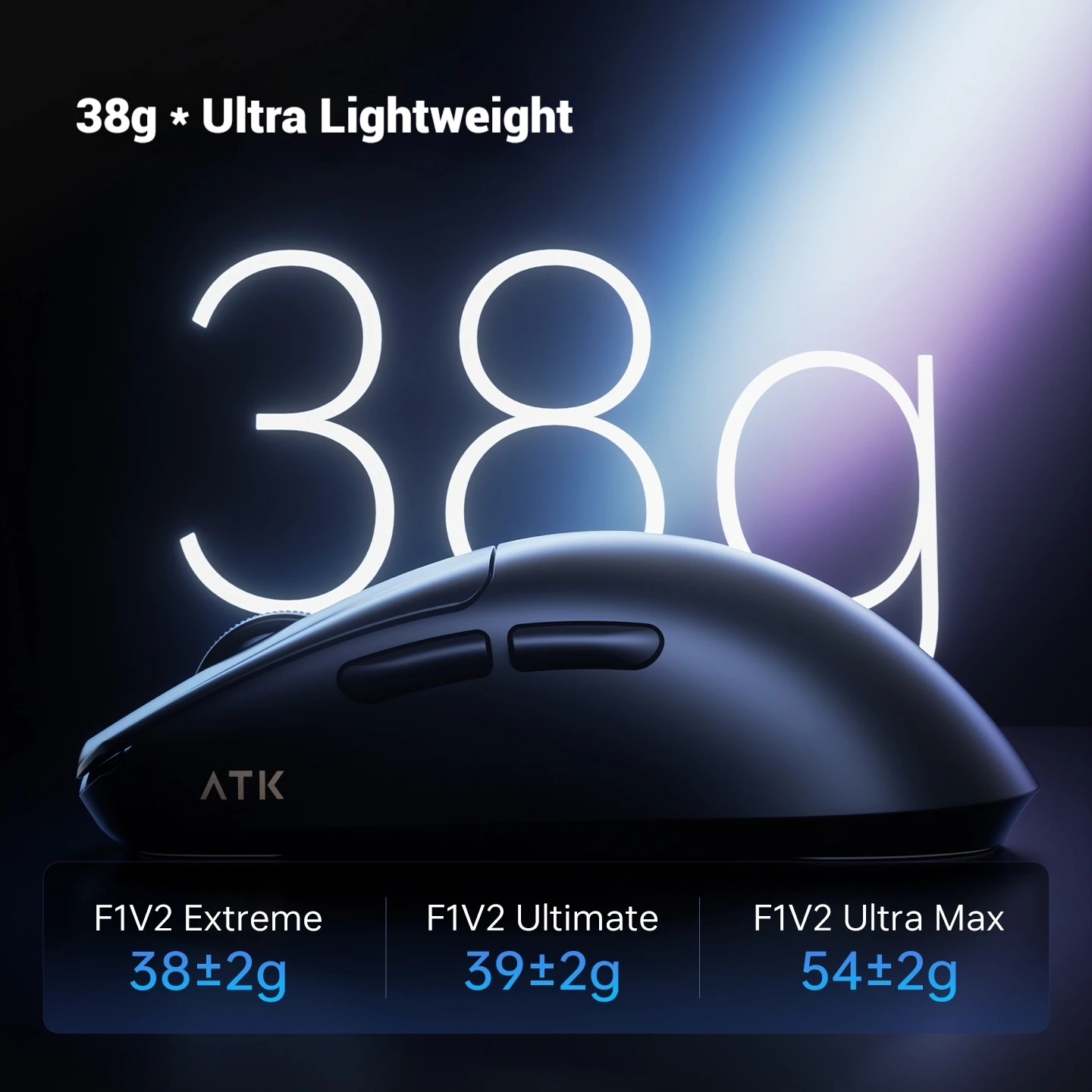
Wireless Mouse Built for Notes and Chart Switching
💬 One-line tip: if you live between charts, notes, and browser tabs, the right basic tool is felt more than you’d think.
🙋 FAQ
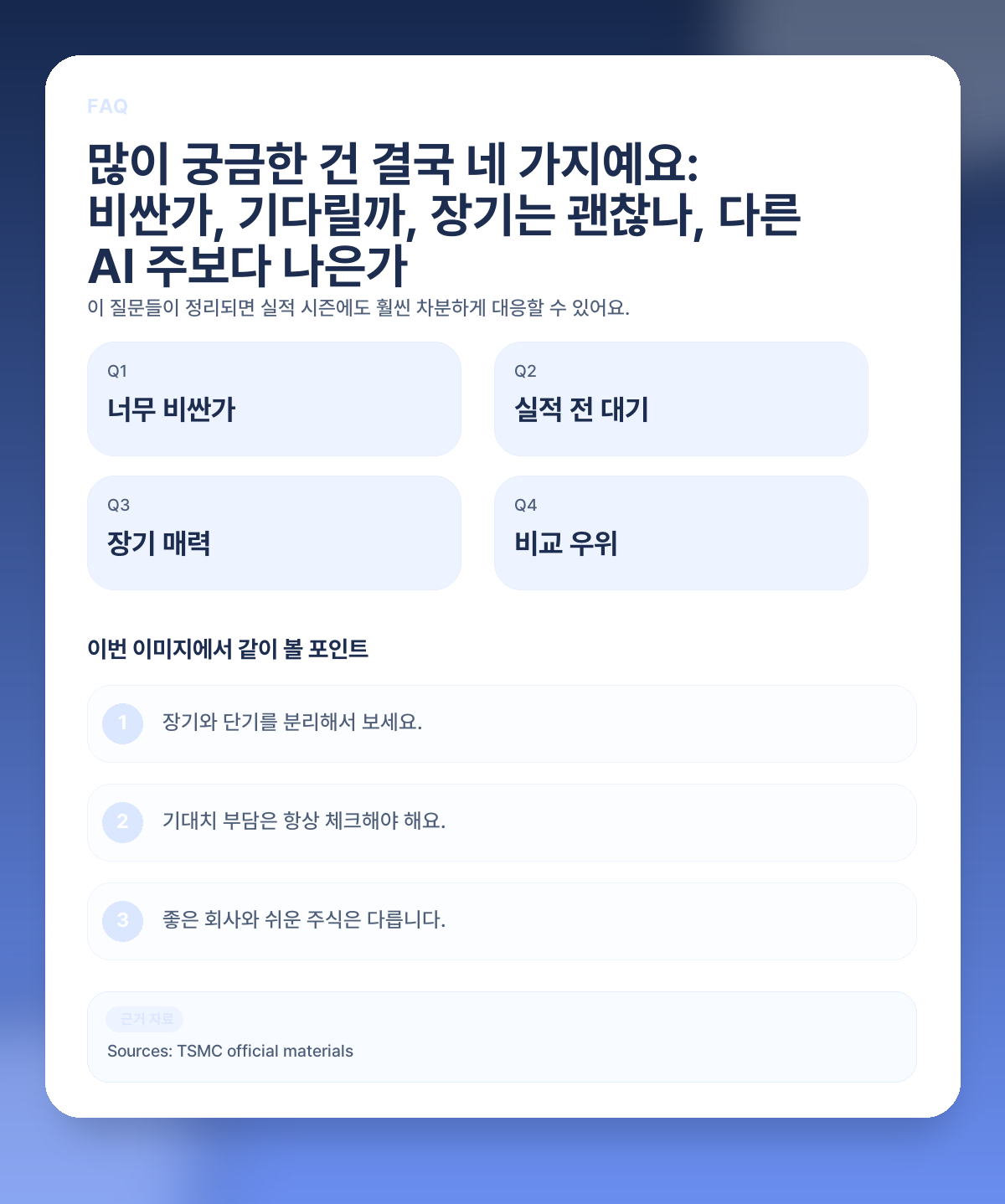
❓ Isn’t TSMC too expensive right now?
The “expensive” feeling is natural. But TSMC is valued not as a value stock — it is treated as core infrastructure of the AI supply chain, so you have to weigh the price burden and the long-run structural premium together.
❓ Should I wait until after earnings?
Expectations pile up into prints, so staged entries are the safer default. Splitting your pace around the calendar beats one all-or-nothing call — and it is easier to live with.
❓ Is TSMC safer than Nvidia?
Its business mix is broader and steadier, but it carries different risks — geopolitics, the foundry cycle. “Safer” is the wrong frame; “a different risk profile” is the right one.
❓ Does the long-term case still hold?
As long as AI chip demand and its advanced-node position hold, the long-term logic stays strong. But a living thesis does not erase short-term pullbacks.
🔎 Public sources referenced


