


Lately, Nvidia often feels less like a semiconductor stock and more like a thermometer for the entire AI rally. 🙂
That makes the call harder. Earnings are still monster numbers, Big Tech AI spending is alive and well — yet the stock already looks like it has run a long way.
As of April 15, 2026, this piece lays out where Nvidia actually stands, why some investors see short-term strain, and why many still treat it as the core holding of the cycle — using official sources first.

Pairs well with this article
Monitor Light Bar That Cuts Eye Strain
💬 One-line tip: late-night chart sessions get noticeably kinder to your eyes once you fix the ambient lighting alone.
✨ Key takeaways
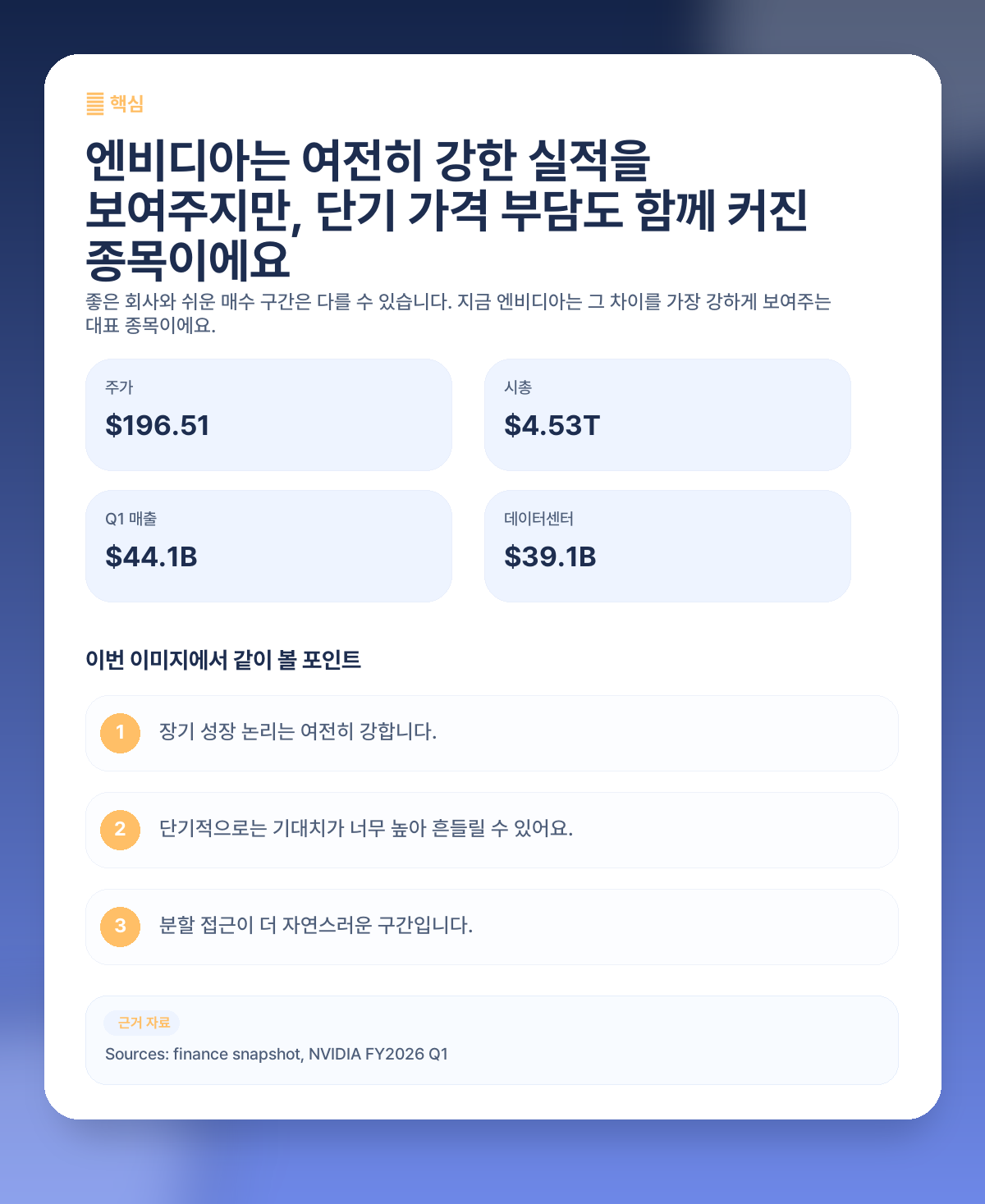
Bottom line first: Nvidia is still at the center of the AI cycle and the numbers are strong. The question has shifted from “is it a great company?” to “how much expectation does today’s price already carry?”
So it is more realistic to treat it as a stock that remains a powerful long-term growth name, yet would not surprise anyone with a near-term pullback.
- Long-term strength: AI compute demand and data-center revenue keep showing up in hard numbers.
- Short-term strain: expectations are so high that even good results can wobble the stock.
- Practical point: pacing matters more than going all-in at one price.
📈 Where Nvidia actually stands right now
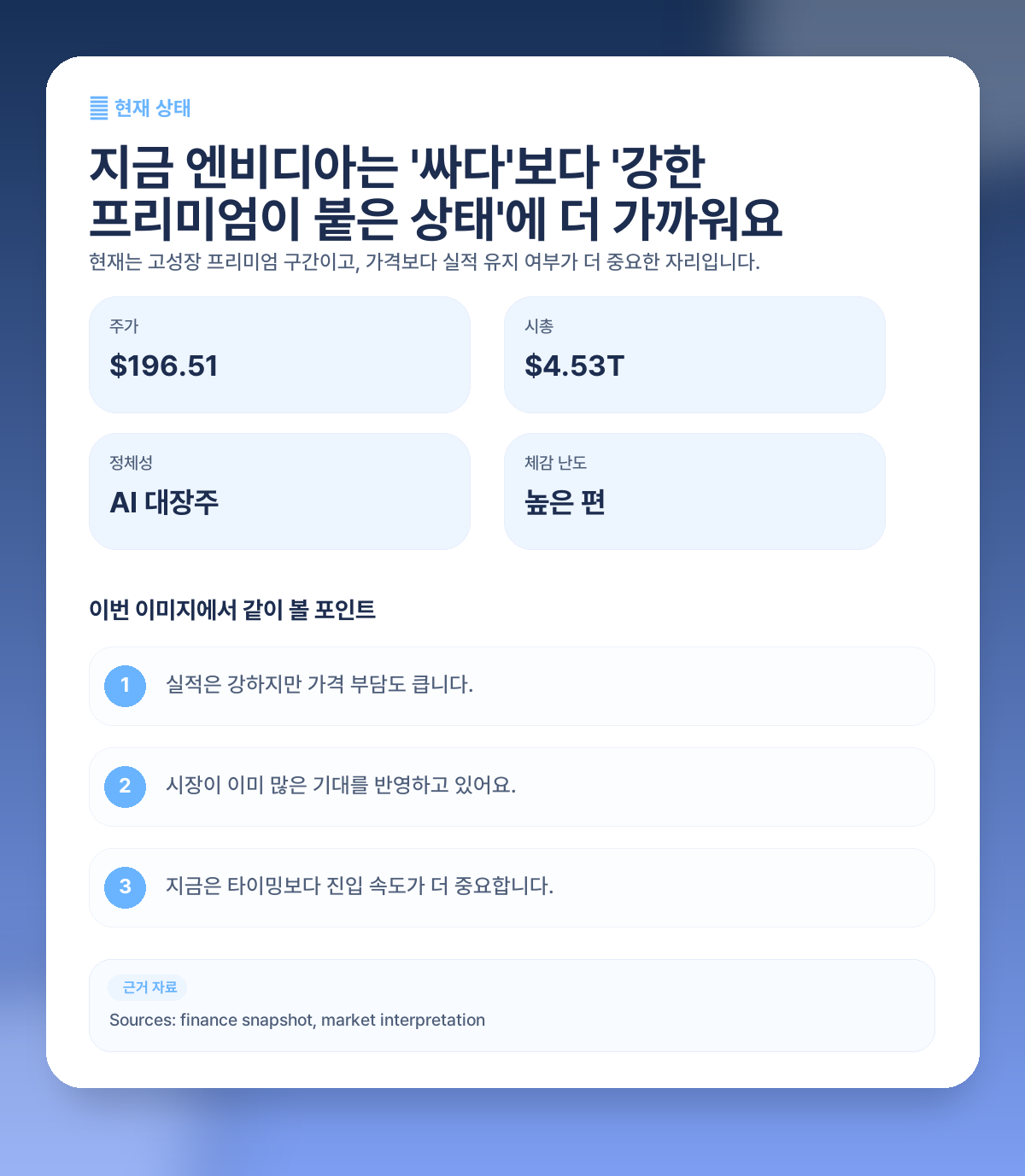
Per financial data on April 15, 2026, Nvidia trades at $196.51 with a market capitalization of roughly $4.526 trillion. That is not a bargain-hunting zone; the market is clearly paying a growth premium.
The reason the market cannot walk away is that the results and demand are still numbers, not narratives. Q1 FY2026 revenue was $44.1 billion, with data-center revenue alone at $39.1 billion — still overwhelming.
The right way to read Nvidia today is not to stop at “it’s expensive,” but to ask how far that expensive price is justified by delivered growth.
- We are closer to a high-growth premium zone than an undervalued one.
- Earnings momentum remains fierce, with data centers carrying the load.
- Price pressure and earnings strength coexist — both are true at once.
🤖 Why the long-term camp is still crowded
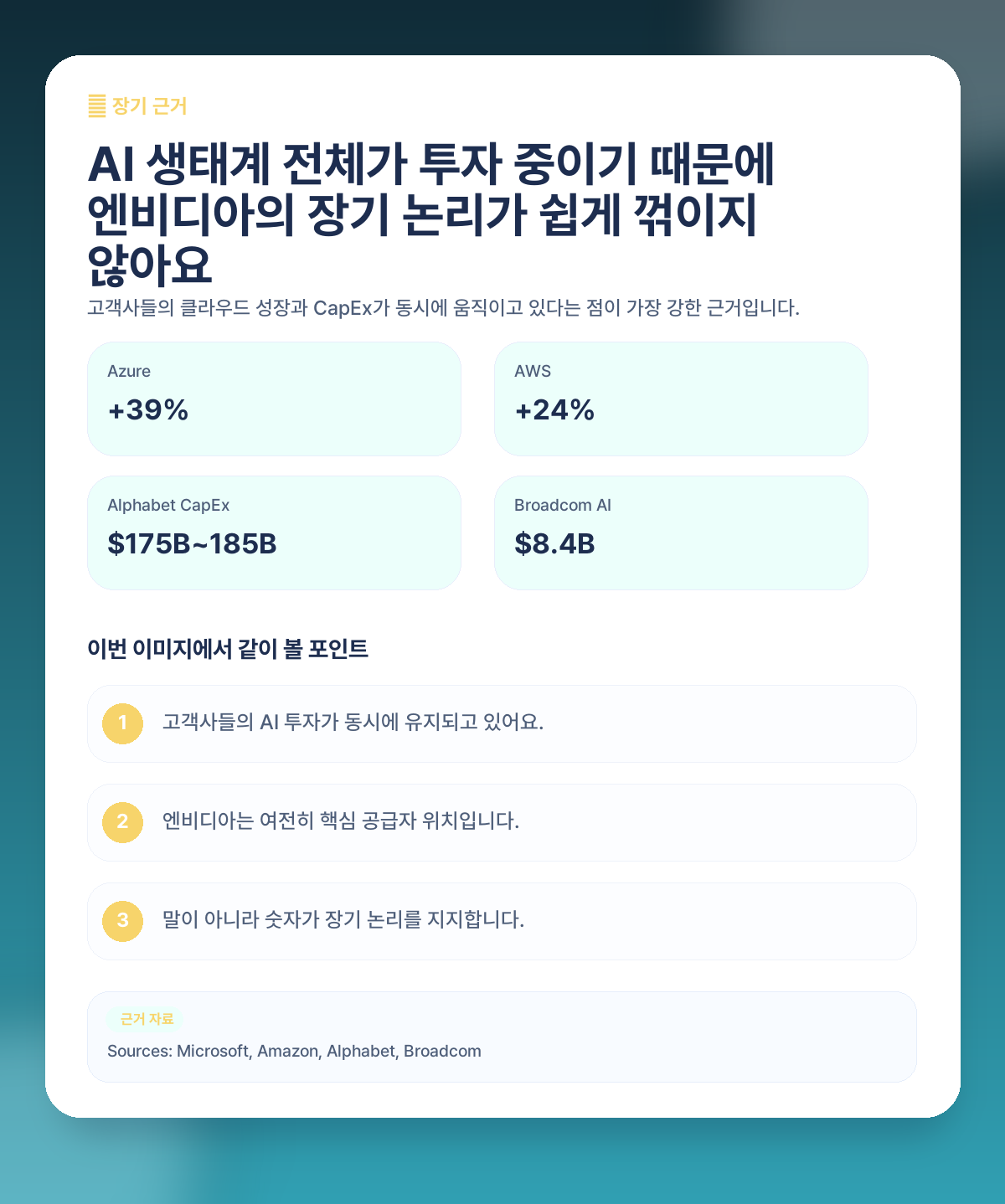
The core of the long-term case is not that Nvidia alone is excellent — it is that Nvidia’s customers are all raising AI infrastructure spending at the same time. Microsoft posted 39% Azure growth; Alphabet guided 2026 capex to $175–185 billion.
Amazon guided AWS up 24% with roughly $200 billion of 2026 capex, and Broadcom’s AI semiconductor revenue keeps compounding at double-digit rates. Nvidia is not running ahead of an empty track — the whole ecosystem is still expanding.
That is why the long Nvidia story stays intact: GPU demand, data-center buildouts, AI server investment, and model sophistication all reinforce one another.
- Synchronized AI capex among customers is the strongest long-term evidence.
- Nvidia keeps its position as the critical supplier in the AI infrastructure cycle.
- This phase is backed by real revenue and real capital spending, not just talk.
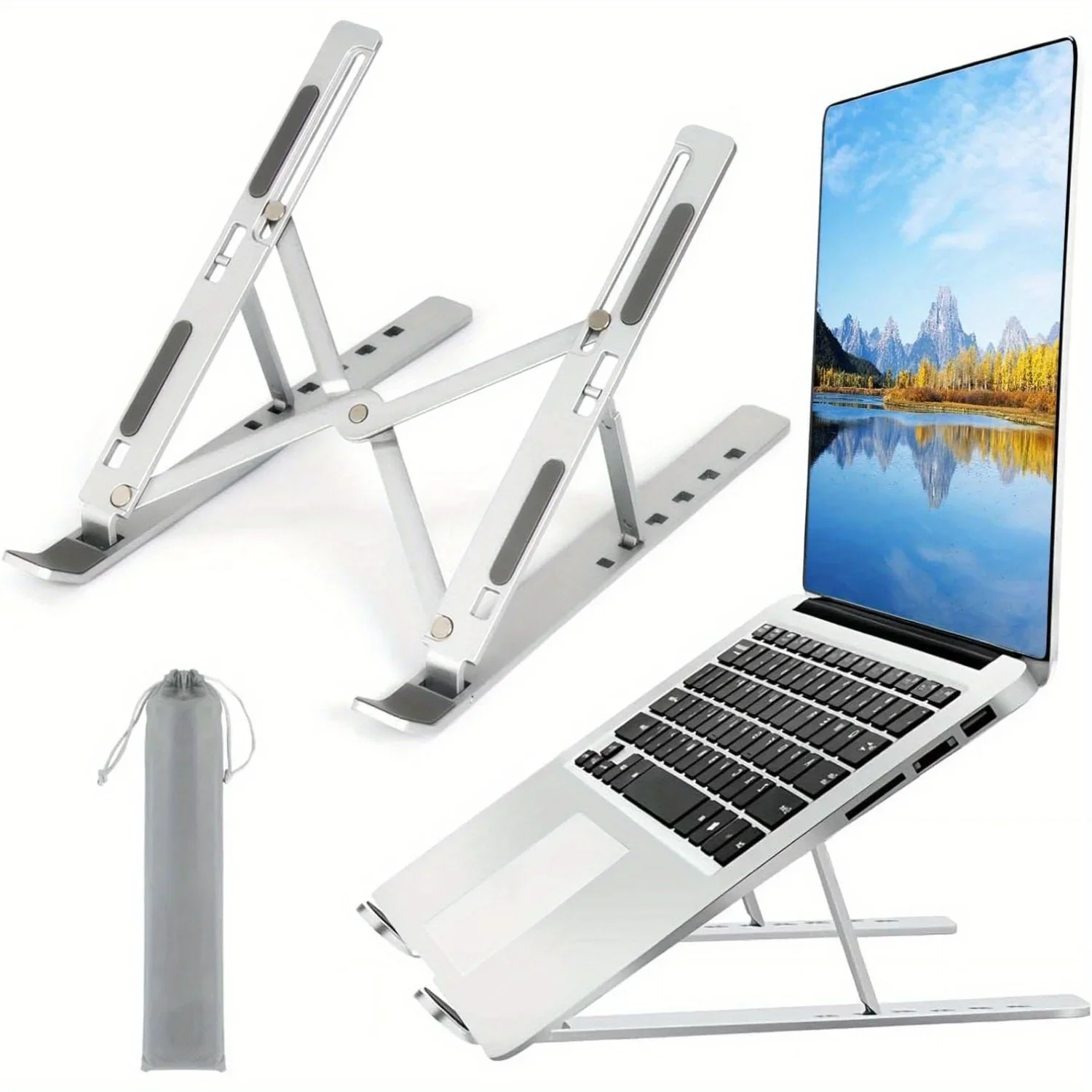
Pairs well with this article
Laptop Stand That Makes Long Sessions Easier
💬 One-line tip: raising your eye line just a little cuts intraday fatigue more than you would expect.
⚠️ So why the constant short-term caution?
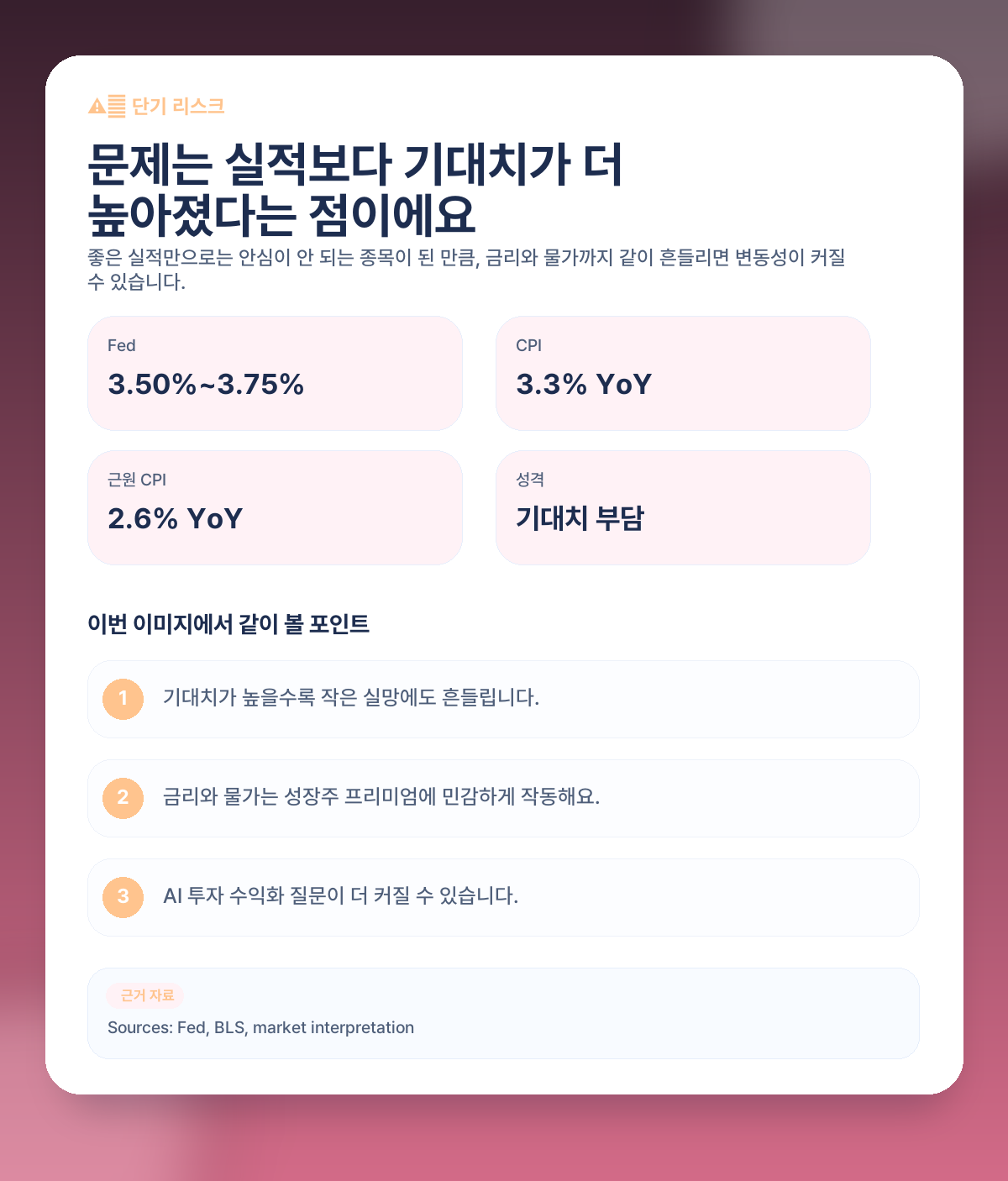
First: expectations. A merely good quarter is no longer enough for Nvidia; the stock sighs with relief only when guidance beats an already-high bar. The higher the bar, the harder a small disappointment lands.
Second: rates and inflation. On March 18, 2026, the Fed held its policy rate at 3.50%–3.75%, and March CPI ran 3.3% year over year. Growth-stock premiums remain exquisitely sensitive to the rate path.
Third: the durability question. Big Tech is spending hard today, but at some point the market will press harder on “how much of this capex is coming back as profit?”
- Elevated expectations magnify every small letdown.
- Rates and inflation hit growth premiums disproportionately.
- The AI-monetization interrogation will only get louder.
🧭 The realistic stance if you want in now

Nvidia may be the name you regret missing over a five-year horizon, but in this stretch managing your entry pace beats calling the direction.
Deploying a lump sum means swallowing every swing around earnings, CPI, and FOMC head-on. On the other hand, being too scared to own any leaves you watching the long-term uptrend from the sidewalk.
So for a stock like Nvidia, the practical toolkit is staged entries, a calendar you actually watch, and expectations you actively manage.
- Several smaller buys beat one big bet.
- Slow your buying pace around earnings, CPI, and FOMC dates.
- Separate the long-term thesis from the short-term price.
🗓️ Numbers and dates to watch together
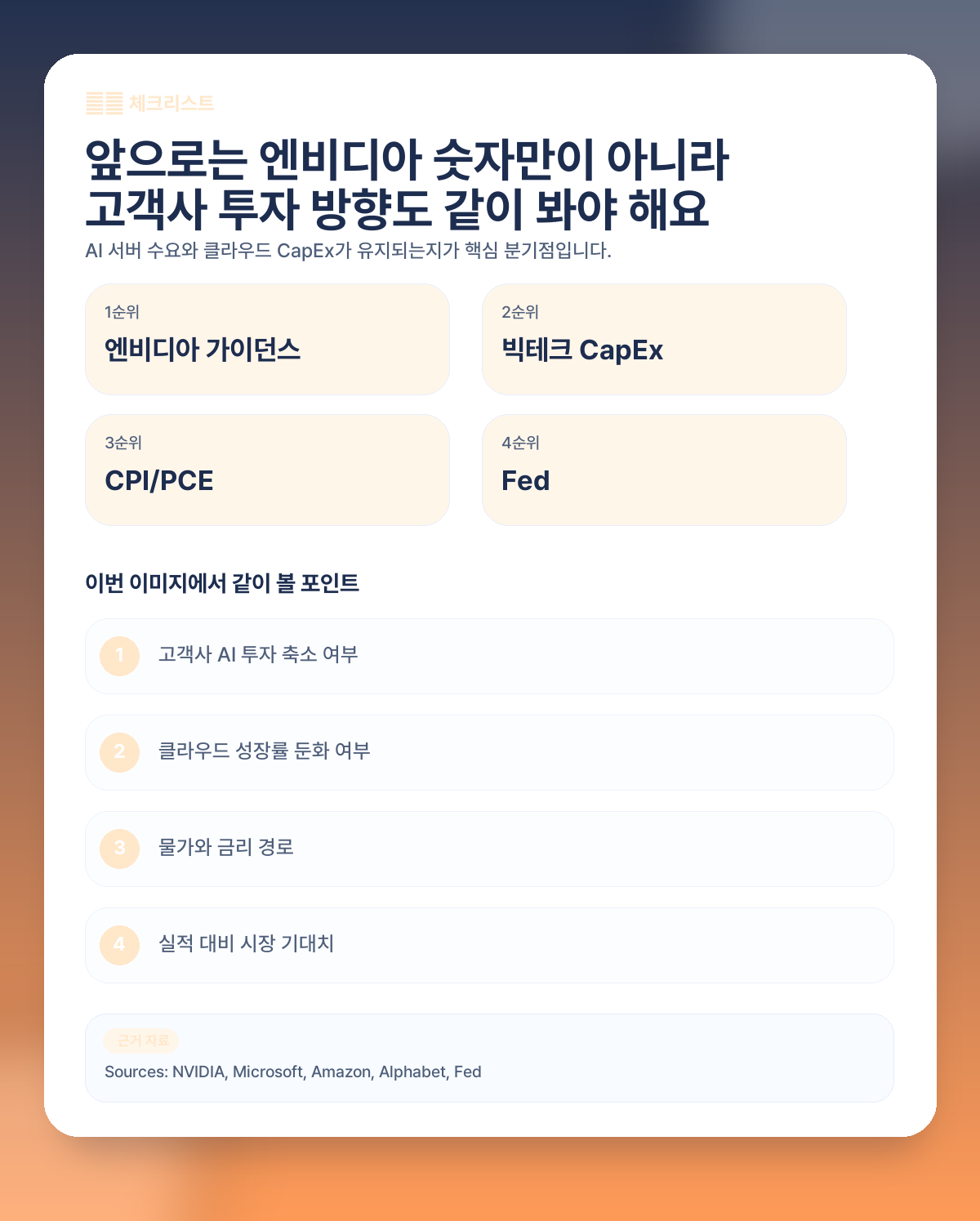
If you intend to keep owning the story, you cannot watch company numbers alone. Track the Fed, inflation, payrolls — and the AI investment direction at Microsoft, Amazon, and Alphabet.
Nvidia’s own print reads better next to customers’ capex and cloud growth rates, plus AI semiconductor revenue at adjacent names like Broadcom.
- Nvidia’s next earnings and guidance
- Whether Big Tech holds its AI capex plans
- The Fed’s rate path and CPI/PCE trend
- How much GPU demand converts into customer monetization
Pairs well with this article
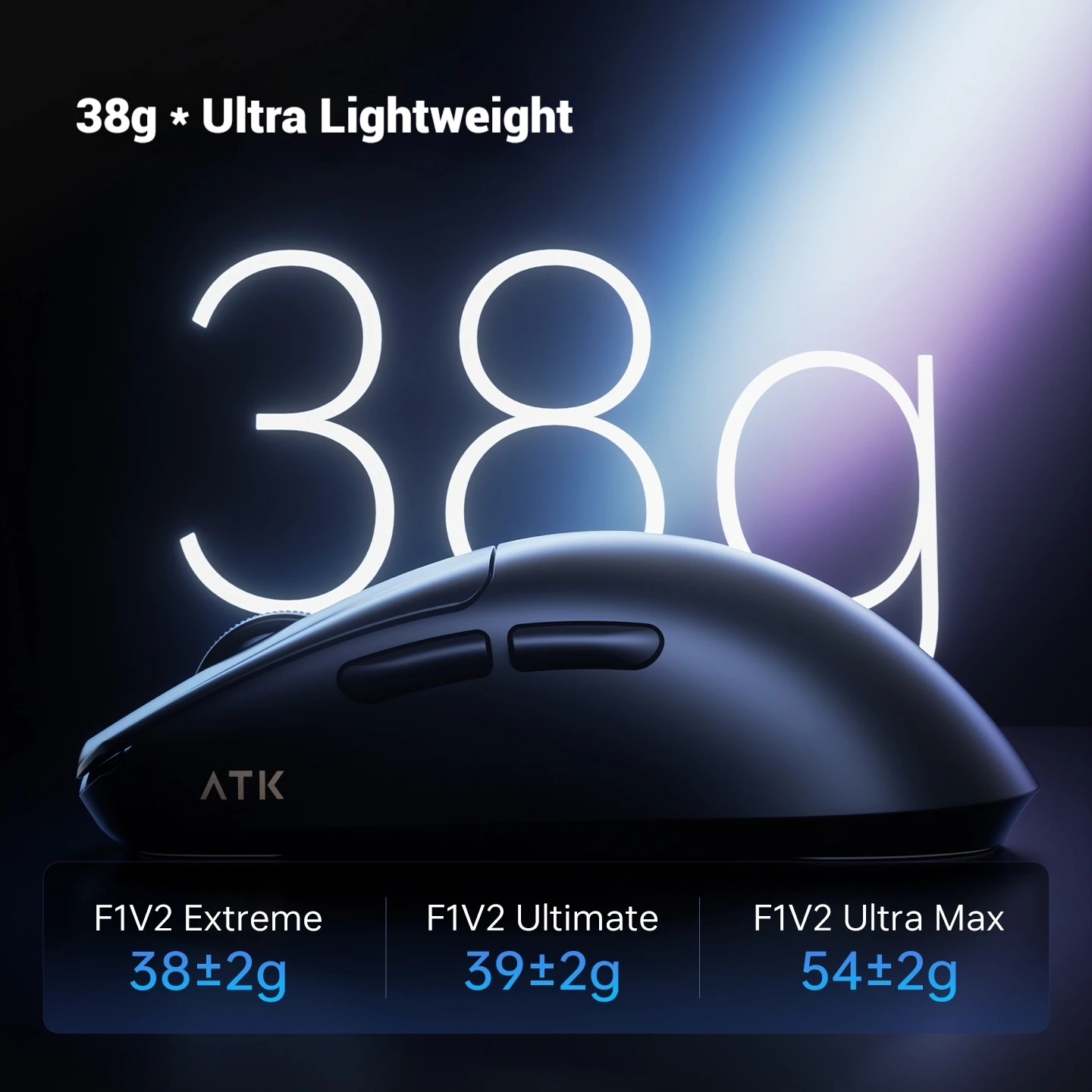
Wireless Mouse Built for Notes and Chart Switching
💬 One-line tip: if you live between charts, notes, and browser tabs, the right basic tool is felt more than you’d think.
❓ FAQ

❓ Isn’t Nvidia too expensive right now?
The “expensive” feeling is natural. But with results and demand still this strong, the question is not whether it looks pricey — it is whether the growth can last long enough to pay for it.
❓ If a short-term pullback hits, is the long-term thesis still alive?
Yes. Price digestion and thesis damage are different things. As long as customers’ AI investment and Nvidia’s data-center revenue keep compounding, the long-term logic does not break easily.
❓ So should I just not buy?
The realistic answer is not “never buy” — it is “slow the pace and enter in stages.”
❓ Would an ETF be the calmer choice over Nvidia?
If single-stock volatility is more than you want to hold, broad vehicles like QQQ or an S&P 500 fund are psychologically easier to live with.
🔎 Public sources referenced


