KOSPI Rebounds After 10% Plunge: Correction or Opportunity for Samsung Electronics and SK hynix?

The KOSPI just delivered the kind of move that forces investors to slow down. After a near-10% plunge on June 23, South Korea's benchmark index rebounded sharply on June 24. The immediate question is simple: is this a healthy correction, or an opportunity in Samsung Electronics and SK hynix?
My short answer: the rebound matters, but it does not prove that the correction is over. Samsung Electronics and SK hynix are still central to the AI-memory story, yet this is a moment to check HBM earnings, foreign flows, the won, U.S. rate pressure, and chip-stock concentration before calling the pullback a clean buying opportunity.
✨ Key Takeaway
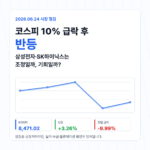
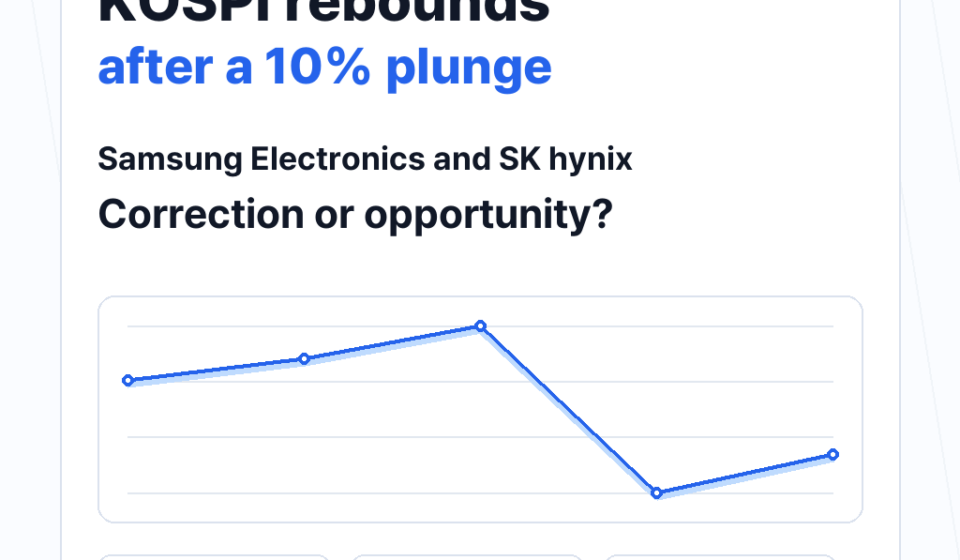
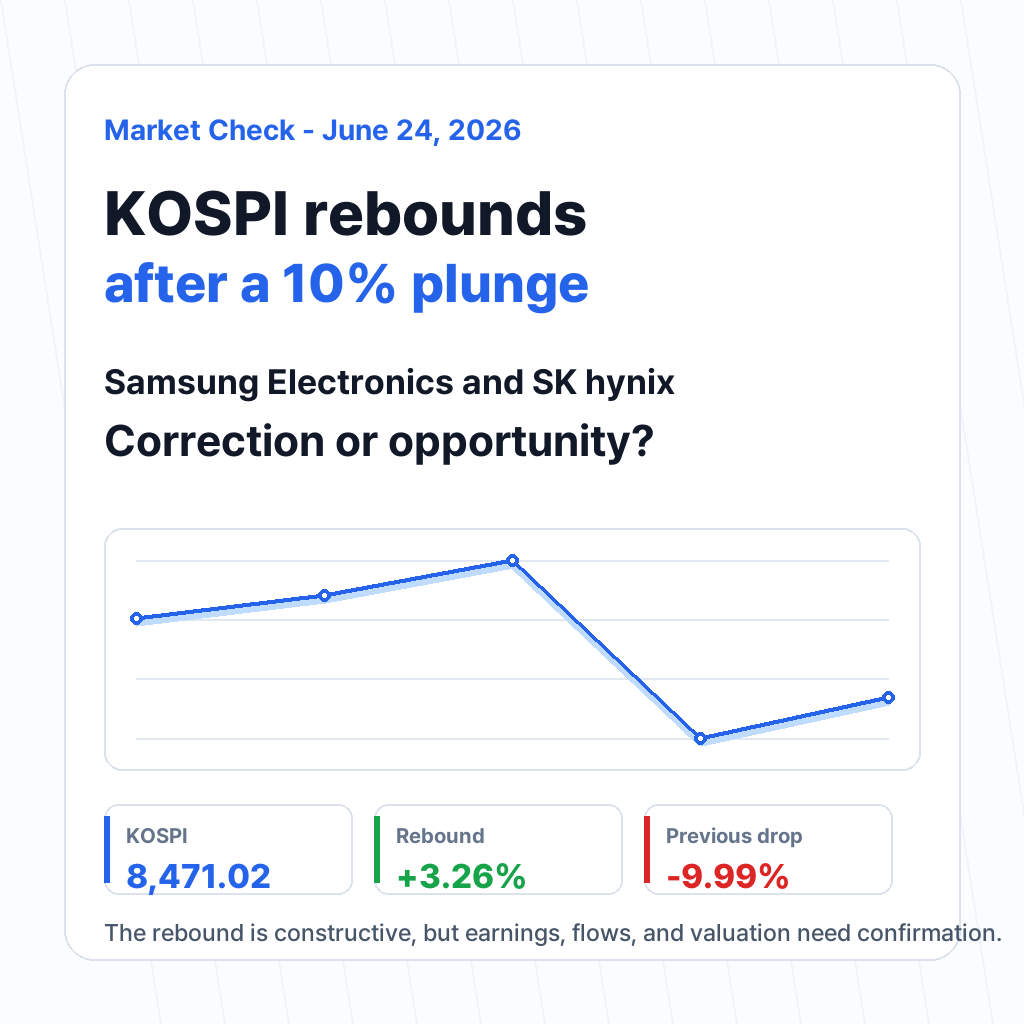
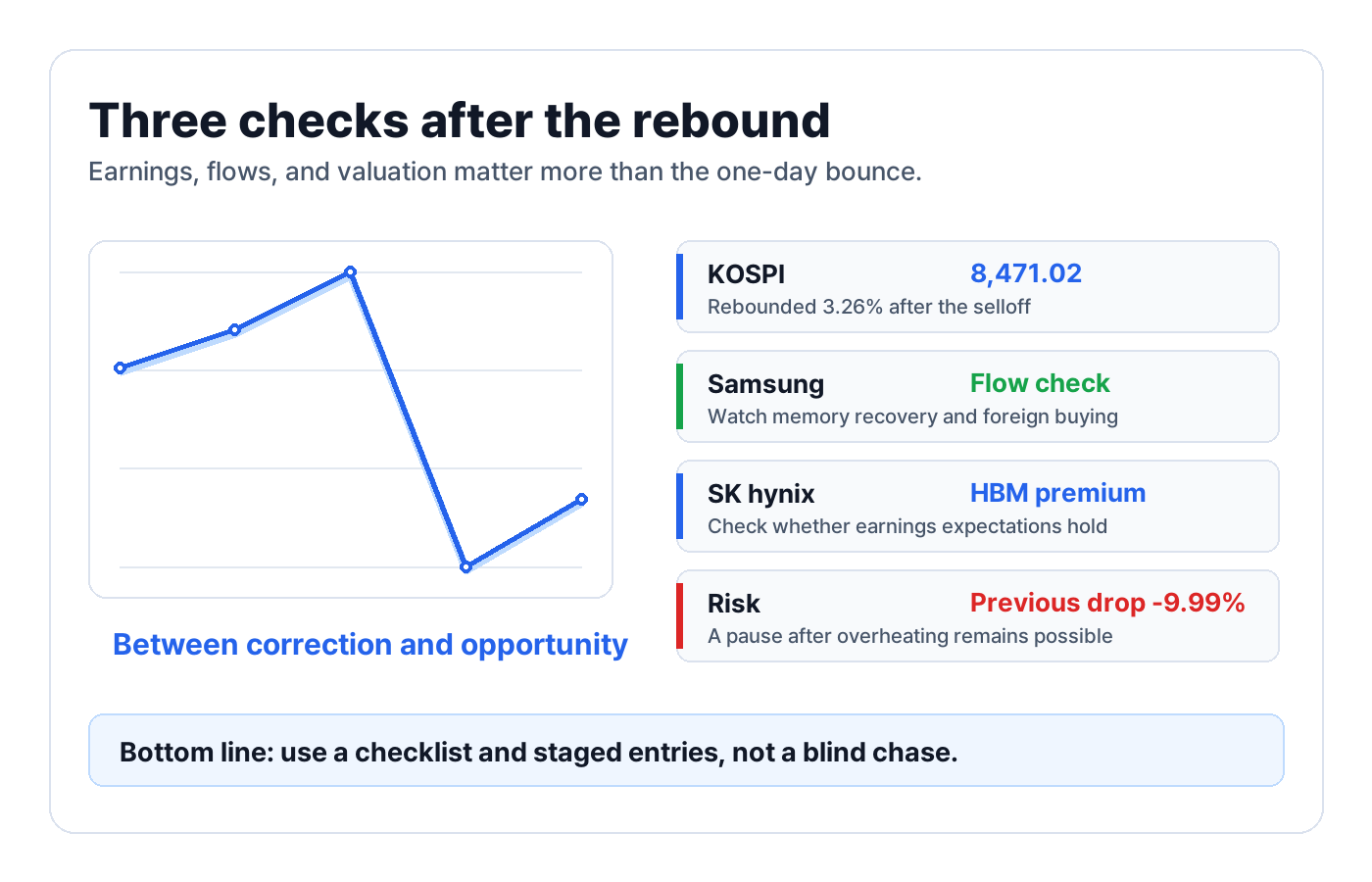
As of June 24, 2026, the KOSPI closed at 8,471.02, up 267.18 points, or 3.26%, from the previous session. On June 23, it had fallen 9.99% to 8,203.84, with Samsung Electronics and SK hynix also under heavy pressure.
That means the June 24 move is a real relief rally, but not a full confirmation. It combines two forces: bargain hunting after panic selling, and the market's continuing belief that AI memory demand can support earnings.
| Item | What to Know as of June 24, 2026 |
|---|---|
| KOSPI | 8,471.02, up 3.26% |
| Previous shock | 8,203.84 on June 23, down 9.99% |
| Samsung Electronics | Rebound leader, +9.11% in Trading Economics summary |
| SK hynix | Rebounded too, but with a smaller +2.74% move |
| Main judgment | One rebound is not enough; earnings, flows, and FX need confirmation |
So this was not a simple "all clear" day. It was more like the market building its first defense line after a sharp reset.

How Should Investors Judge the Quality of the Rebound?
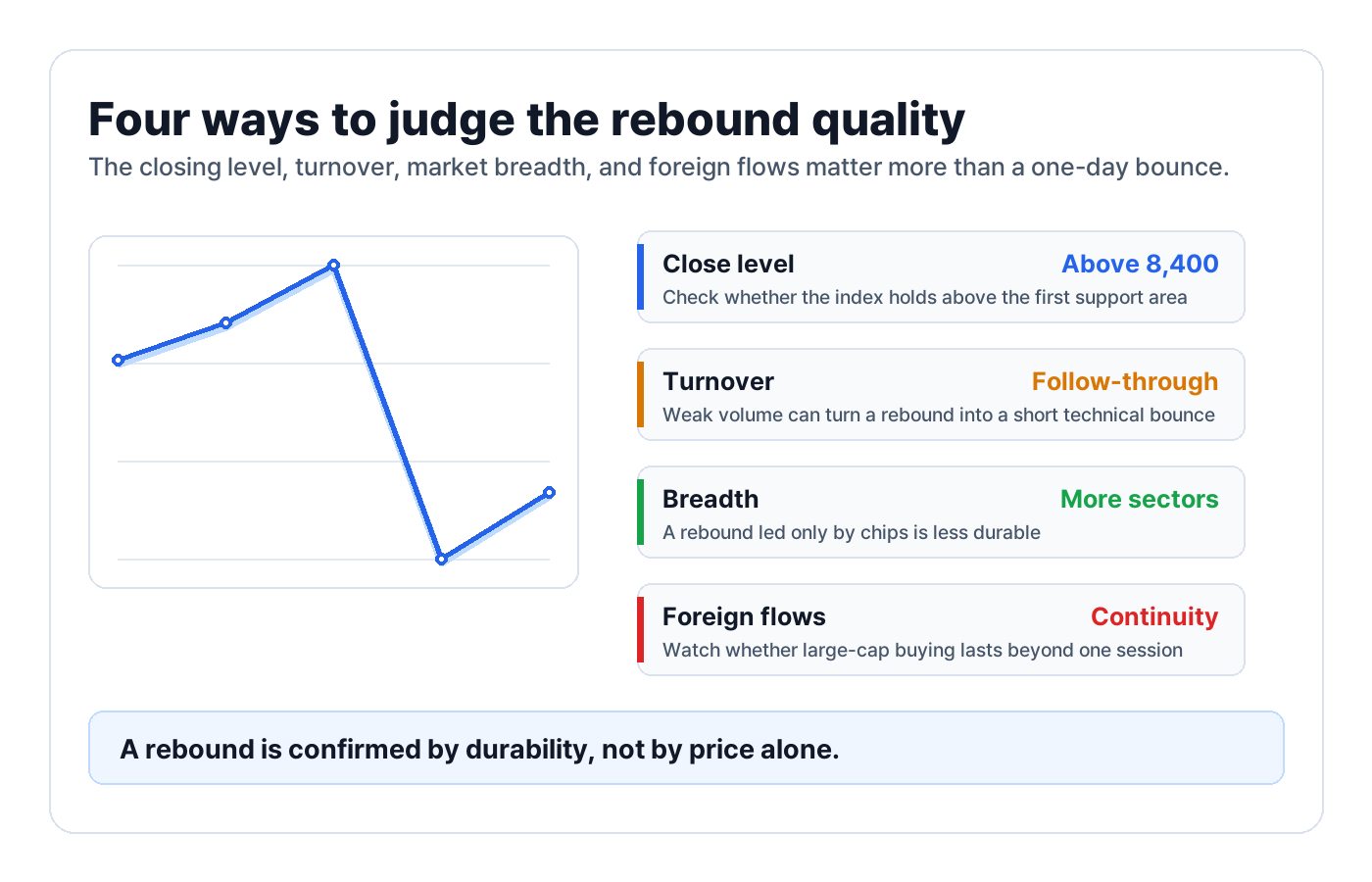
Not every rebound carries the same message. After a 9.99% drop the previous day, the one-day percentage gain matters less than whether the rebound can hold.
The first check is the closing level. The KOSPI closed at 8,471.02 on June 24, but the market also gave back part of its intraday strength.
The second check is turnover. If trading activity fades quickly, the rebound may be only a technical bounce after forced selling.
The third check is market breadth. If only Samsung Electronics and SK hynix rise while the rest of the market stays weak, the index can look stronger than it really is.
The fourth check is foreign flow continuity. A single day of large-cap buying is useful, but it is not enough by itself.
Why Did the KOSPI Drop Nearly 10%?
The core issue was not just one bad headline. It was the market asking whether the AI-chip trade had moved too far, too fast.
Samsung Electronics and SK hynix had become the main engines of the 2026 KOSPI rally. Investors were pricing in high-bandwidth memory, server DRAM, and data-center demand. That story is still important, but when a market becomes this concentrated, a reversal in two stocks can shake the entire index.
Channel News Asia reported that Samsung Electronics and SK hynix each lost more than 12% on June 23, triggering an automatic 20-minute market-wide trading halt. It also noted that the two chipmakers had grown to more than half of KOSPI market value.
That is the key lesson. The selloff was not only about weakness in one session. It exposed the structural volatility of a market dominated by AI-memory leaders.
What Does the June 24 Rebound Mean?
The rebound means panic eased, at least for one session. Trading Economics reported that the KOSPI closed at 8,471.02, up 3.26%, with Samsung Electronics up 9.11% and SK hynix up 2.74%.
But the difference between the two chipmakers matters. Samsung rebounded more strongly, while SK hynix recovered less. That suggests investors are not treating the two stocks the same way.
Samsung can trade as a broad market bellwether and a recovery candidate after a sharp drop. SK hynix, on the other hand, already carries a strong HBM-leadership premium, so the market may demand more proof from earnings, pricing, and customer demand.
Samsung Electronics and SK hynix Need Different Lenses
Both companies are central to the AI-memory cycle, but they are not identical investment stories.
| Factor | Samsung Electronics | SK hynix |
|---|---|---|
| Market role | KOSPI bellwether with memory, foundry, and mobile exposure | More direct HBM and high-performance memory story |
| Rebound meaning | Recovery trade, large-cap defense, HBM hope returning | HBM premium needs confirmation |
| Opportunity driver | HBM catch-up, shareholder returns, memory pricing | HBM supply expansion, customer trust, high margin |
| Main risk | HBM progress may arrive slower than expected | Valuation already embeds strong expectations |
| What to watch | HBM revenue, DRAM/NAND pricing, foundry losses | HBM pricing, customer volume, competitor catch-up |
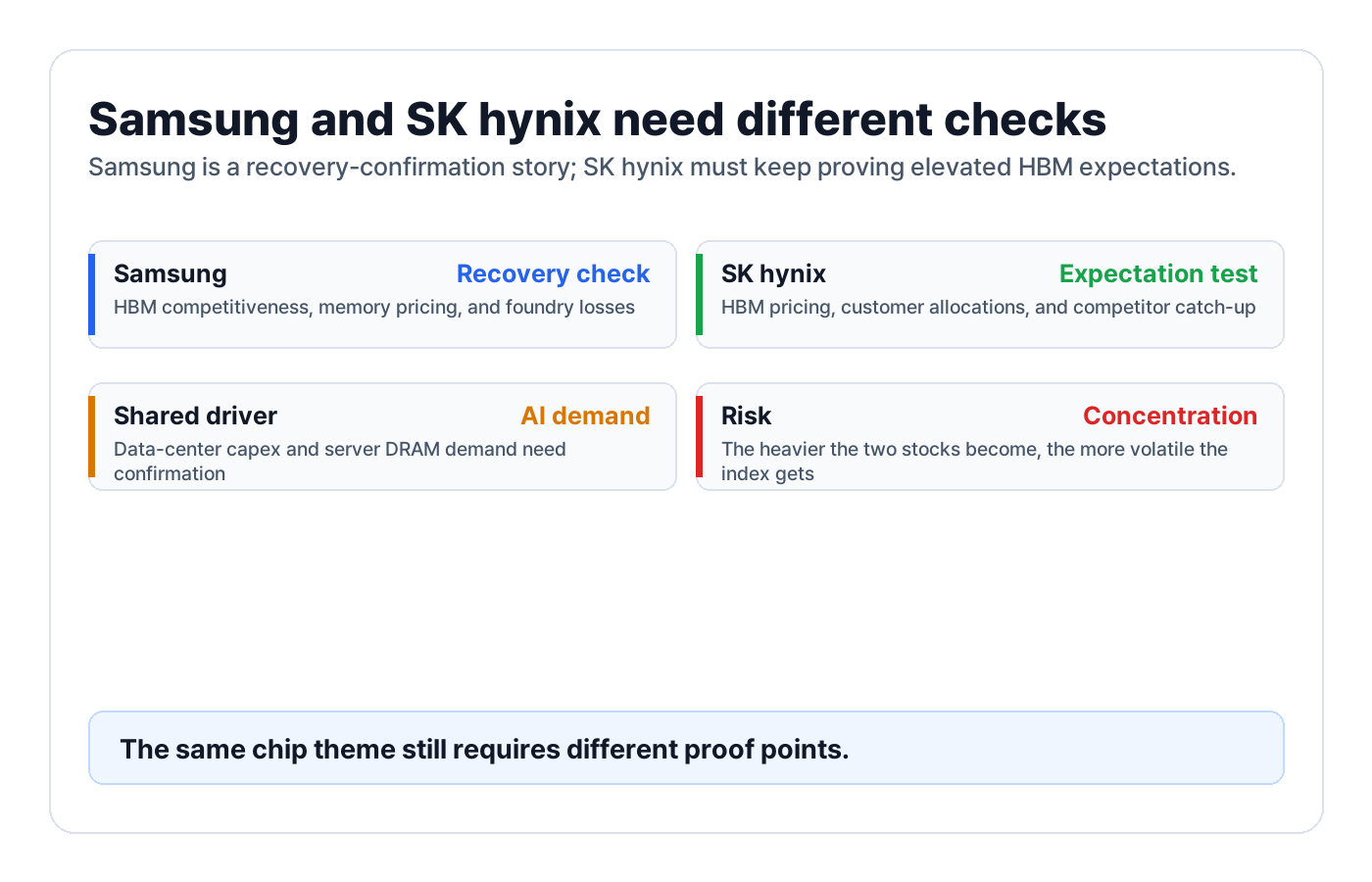
In plain terms, Samsung looks more like a recovery-and-re-rating story, while SK hynix looks more like a proof-and-confirmation story.
Samsung Electronics needs to show that HBM competitiveness and memory pricing are translating into actual earnings improvement. A strong one-day rebound does not, by itself, confirm a full earnings recovery. Investors still need to watch high-value memory mix and foundry losses.
SK hynix already carries a large HBM premium. That means the market may react more strictly even when the news is good. HBM pricing, customer allocation, and competitor catch-up remain the numbers to watch.
Correction or Opportunity?
My read is balanced: the long-term AI-memory theme is not necessarily broken, but the short-term move looks like a volatility reset after an overheated rally.
For this to become a real opportunity, three things need to happen. First, upcoming chip earnings must confirm HBM and server-memory demand. Second, foreign buying should continue beyond one rebound session. Third, the won and U.S. rate pressure should not worsen.
If the following signals appear, the correction could last longer.
| Warning Signal | Why It Matters |
|---|---|
| Rebound fades on weaker volume | Dip buying may not be strong enough |
| Foreign selling continues | Large-cap chip flows remain vulnerable |
| Only Samsung and SK hynix rise | Index breadth stays weak |
| U.S. chip stocks keep falling | Global AI-stock correlation remains a risk |
| HBM or memory pricing outlook weakens | The core earnings story becomes less convincing |
Macro Conditions Still Matter
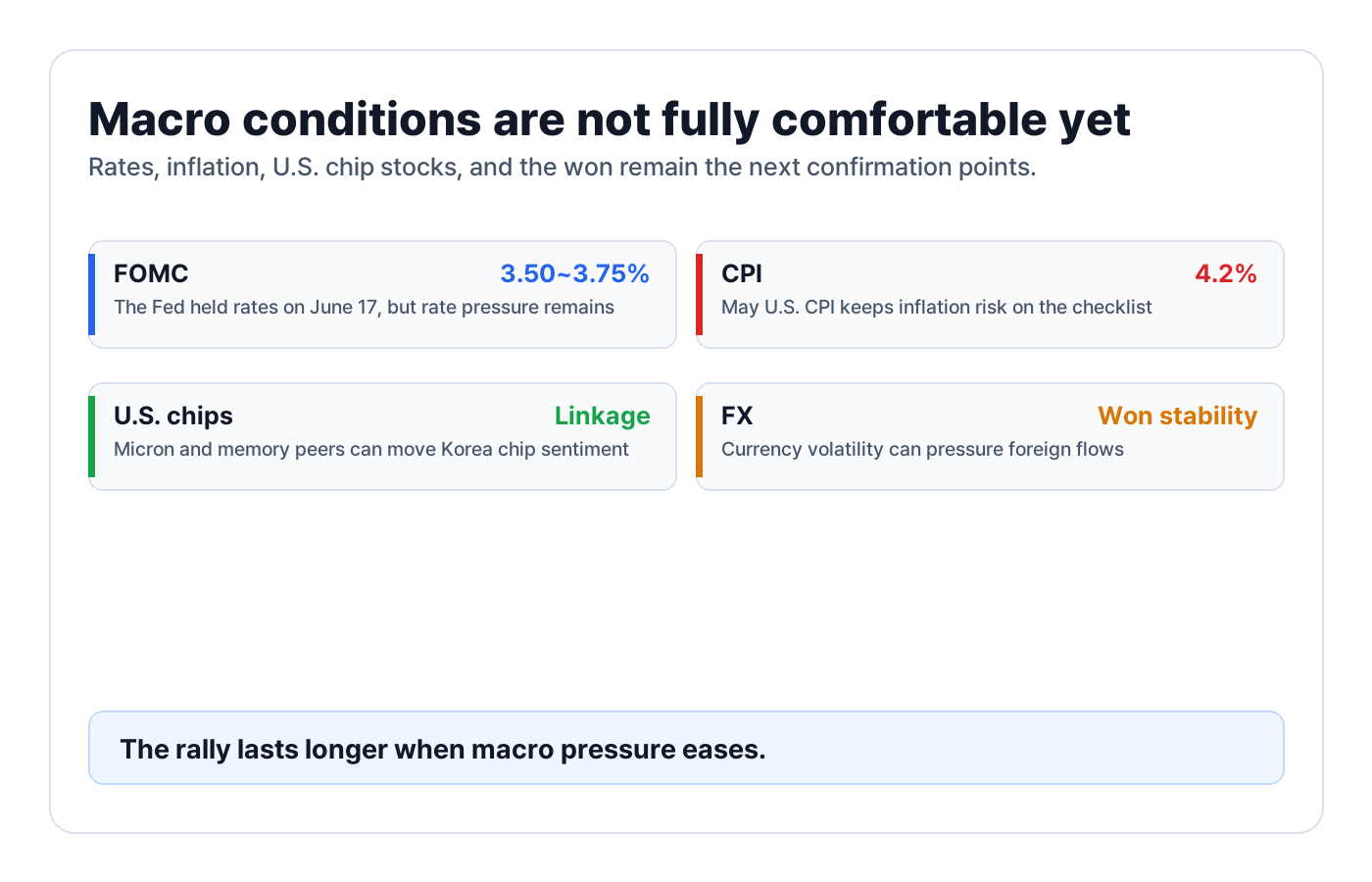
The rebound cannot be judged only by Korean chip stocks. The Federal Reserve held the target range for the federal funds rate at 3.50% to 3.75% on June 17, but that does not remove rate pressure. High rates can keep valuation pressure on growth and semiconductor stocks.
Inflation also remains on the checklist. The May U.S. CPI report showed all-items inflation up 4.2% from a year earlier, with energy still a major pressure point. If inflation remains sticky, rate-cut expectations can fade, which can hurt stocks that already price in a lot of AI optimism.
U.S. semiconductor stocks are another link. Micron and other memory peers can affect sentiment toward Samsung Electronics and SK hynix. For the Korean rebound to last, domestic flows and U.S. chip sentiment both need to stabilize.
Five Things to Check Now
- Whether the KOSPI can hold above the 8,400 area for several sessions
- Whether sectors beyond Samsung and SK hynix also rebound
- Whether foreign investors return to large-cap semiconductor names
- Whether USD/KRW stabilizes instead of spiking
- Whether Micron earnings and U.S. semiconductor shares support the Korean chip trade
The important question is not simply "did the index bounce?" It is whether the rebound gets broader.
Related Posts
- KOSPI Near 9,000: Can South Korea's Stock Market Reach 10,000 in 2026?
- Samsung Electronics Near Record Highs: Can the Stock Keep Rising in June 2026?
- SK hynix Hits Record Highs: Can the HBM Leader Keep Rising?
This post is an event update. The older posts are pillar pages for the broader KOSPI, Samsung Electronics, and SK hynix outlooks.
FAQ
Does the KOSPI rebound mean the correction is over?
Not yet. A 3.26% rebound is meaningful, but it followed a very large decline. The market still needs follow-through in volume, breadth, and foreign flows.
Is Samsung Electronics more attractive than SK hynix now?
Samsung may look stronger in a short-term rebound, but SK hynix remains more directly tied to the HBM leadership story. Samsung needs to prove HBM catch-up; SK hynix needs to prove that its premium can be sustained by earnings.
Is this a buying opportunity?
From an information standpoint, this is a conditional watch zone. It can become an opportunity if earnings and flows confirm the rebound. A one-day bounce alone is not enough.
Is the KOSPI 10,000 story over?
Not necessarily. But for KOSPI 10,000 to remain realistic, the rally needs broader market breadth beyond semiconductors, including financials, shipbuilding, defense, power equipment, and autos.
Bottom Line
The June 24 rebound gave the market relief, but not a full answer. A healthy rebound gets broader, brings foreign flows back, and is supported by earnings. A fragile rebound depends on only a few mega-cap chip names.
For Samsung Electronics and SK hynix, the next signal is not just price. Watch HBM earnings, U.S. semiconductor stocks, foreign buying, USD/KRW, and sector breadth. This is a market that rewards confirmation more than excitement.
Public Sources
- Trading Economics, South Korea Stock Market
- Channel News Asia, South Korea's KOSPI tanks nearly 10%
- Morningstar / MarketWatch, World's hottest stock market rallies after 10% plunge
- Federal Reserve FOMC statement, 2026-06-17
- BLS CPI Summary, May 2026
- KRX Data Marketplace
This post is for informational market commentary only and is not investment advice. Investment decisions and risk are the reader's responsibility.